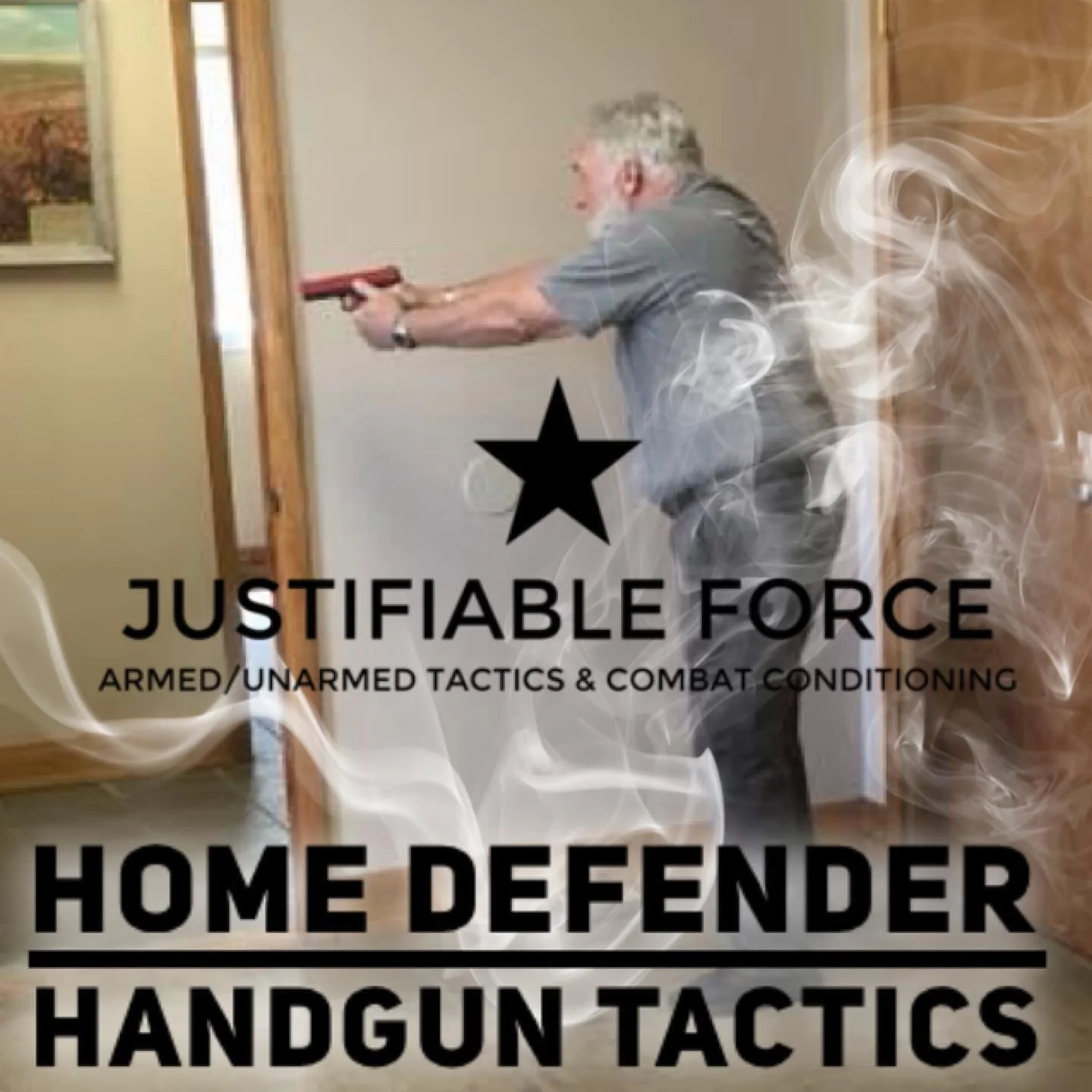
Home defense handgun tactics goes beyond basic shooting fundamentals, focusing on the specific skills, legal knowledge, and mindset required to defend your home and family during a violent encounter.
Key elements include situational awareness, tactical movement, legal considerations, and realistic scenario training.
Key Seminar Topics
Mindset and Situational Awareness: This foundational element emphasizes the mental preparedness to face a life-threatening situation. It covers recognizing and avoiding threats before they enter the home and developing the resolve to act decisively when necessary.
Home Defense Planning: Instructors guide participants in developing a layered defense plan.
Identifying Soft Points: Securing vulnerabilities and fortifying entry points to deter intruders.
Safe Zones and Family Plans: Designating safe rooms and creating communication and movement plans for all family members during an emergency.
Lighting and Cover/Concealment: Utilizing lighting to identify threats and understanding the difference between cover (stops bullets) and concealment (hides you) within the home environment.
Legal Aspects of Using Force in the Home (New Jersey Specific):
Castle Doctrine: A detailed review of New Jersey's specific laws, which generally grant homeowners the right to use force (including deadly force).
Proportionality: Understanding that the force used must be proportional to the threat and the potential criminal and civil liabilities of using force improperly.
Post-Incident Procedures: Protocols for interacting with law enforcement immediately following an incident and legal self-defense support.
Tactical Handgun Skills: Practical application of shooting skills in a home environment.
Movement and Room Clearing: Techniques for moving through hallways, around corners, and entering rooms safely as a single person or as a team.
No/Low-Light Techniques: Utilizing flashlights and understanding how to operate effectively in dim lighting conditions prevalent in home invasions.
Ammunition Selection: Discussion of appropriate handgun calibers and bullet types (e.g., expanding rounds to minimize overpenetration) for home defense.
Stoppage and Malfunction Drills: Practicing clearing firearm malfunctions under stress.
Scenario-Based Training: force-on-force training with laser trainers to replicate realistic home invasion scenarios and test decision-making under pressure.