Citizen's use of force under New Jersey law focuses on the strict legal boundaries and conditions that must be met for a self-defense claim to be justifiable. Unlike "Stand Your Ground" states, New Jersey law imposes a duty to retreat in most public situations, with the primary exception being within one's own home.
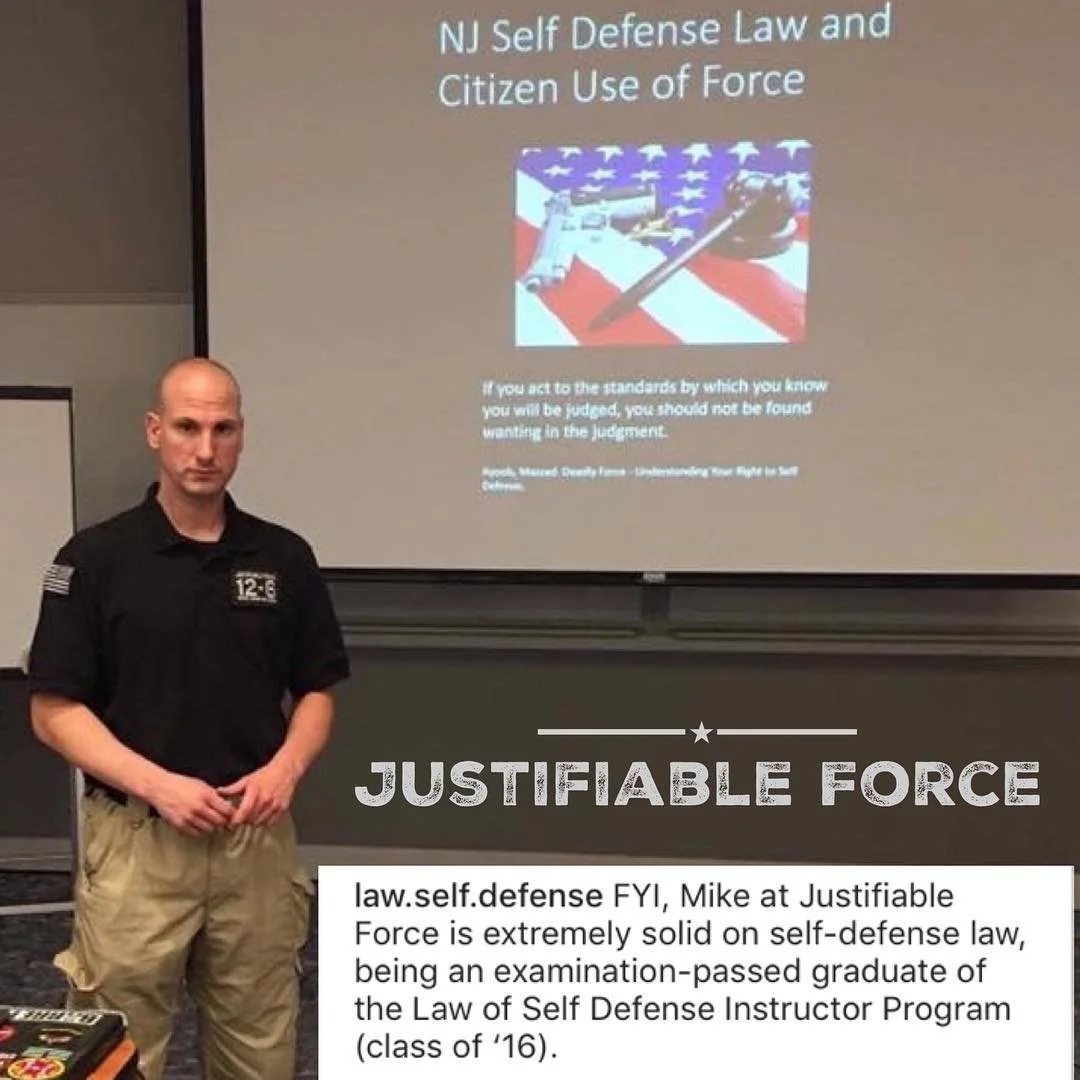
Key Seminar Topics
Core Legal Concepts: The seminar explains that a private citizen has no general duty to protect the public and force can only be used in limited, specific circumstances defined under the New Jersey Code of Criminal Justice (N.J.S.A. 2C:3-1 et seq.). The central element is "reasonable belief" - the individual must have an objective, articulable basis for believing force was immediately necessary.
Proportionality of Force: A critical component is understanding that the force used must be proportional to the unlawful force being threatened.
The Duty to Retreat:
Outside the Home:
Inside the Home (Castle Doctrine):
Use of Deadly Force: Specific conditions under which deadly force is justifiable are detailed.
Defense of Others/Property: The law also permits the use of force to protect another person under similar criteria as self-defense. Force may be used to protect property to a certain extent.
Legal Consequences and Reporting: Emphasize that misinterpreting the law can lead to serious criminal charges (assault, manslaughter, murder). The burden of proof to disprove a self-defense claim falls on the state, but the evidence must still support the claim. Participants learn the importance of immediately reporting incidents involving deadly force to law enforcement.
These seminars aim to provide practical guidance on how to act in accordance with state law to limit criminal liability during a defensive encounter.